

Khajuraho Temple: History, Sculptures & Travel Guide to India’s Erotic Wonder
Khajuraho Temple: History, Sculptures & Travel Guide to India’s Erotic Wonder
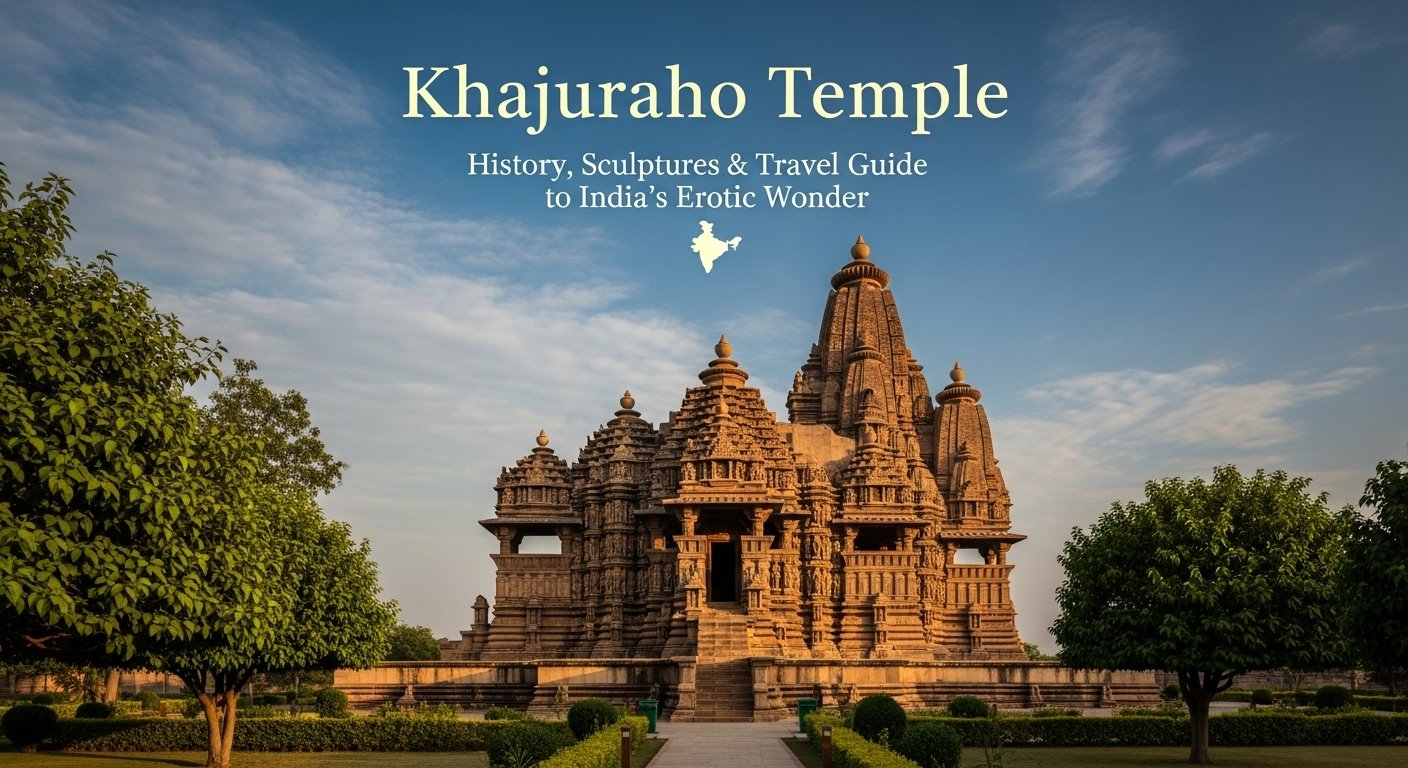
India is home to many architectural masterpieces, but few places enrapture visitors quite like Khajuraho. Nestled in the heart of Madhya Pradesh, the Khajuraho Group of Monuments combines exquisite craftsmanship, daring sculptures, and spiritual resonance. If you’re planning a trip, this guide will take you through the history, art, best temples, how to get there, and how to experience Khajuraho fully.
What Is Khajuraho?
Khajuraho is a small town in the Chhatarpur district of Madhya Pradesh, India. It is famous for its very ornate Hindu and Jain temples built by the Chandela dynasty between about 900 to 1150 CE.
Originally, there were about 85 temples; today, around 20-25 survive in good condition. They are grouped into three clusters: Western, Eastern, and Southern. The western group is the most visited and includes some of the grandest examples.
The temples are renowned for their Nagara-style architecture, rich carvings, often erotic sculptures, depictions of deities, dancers, daily life, musicians, mythical creatures—blending the spiritual with the sensual.
History of Khajuraho & the Chandela Dynasty
The temples were built during the Chandela dynasty’s golden age, about 950-1050 CE, a period of flourishing art, culture, and temple building.
The temple group shows how the Chandelas were ambitious patrons of architecture and sculpture. They combined religious devotion (both Hinduism and Jainism) with an appreciation for beauty, craftsmanship, and the arts.
Over the centuries, many temples were lost or damaged; forests reclaimed some of the area. The complex was “rediscovered” by colonial surveyors in the 19th century.
Architecture & Sculpture: What Makes Khajuraho Special
Temple Layout & Design
-
Temples are built on raised platforms (jagati), with a base, mandapa (assembly halls), antarala (vestibule), ardhamandapa (entrance porch), and a sanctum (garbhagriha) with a towering shikhara above.
-
Many follow the vastu-purusha-mandala grid design, letting the temple shape align with cosmological and symbolic proportions.
-
Ornamental features include amalaka (stone disk atop the tower), kalasha (finial) at the very top, carved toranas (arched entrance gates).
Carvings & Themes
-
The carvings are among the greatest achievements: gods, goddesses, mythical creatures, everyday life scenes (dancers, musicians, household activity) and yes, erotic sculptures. But erotic is only a part—the majority of carving illustrates stories, devotion, aesthetics.
-
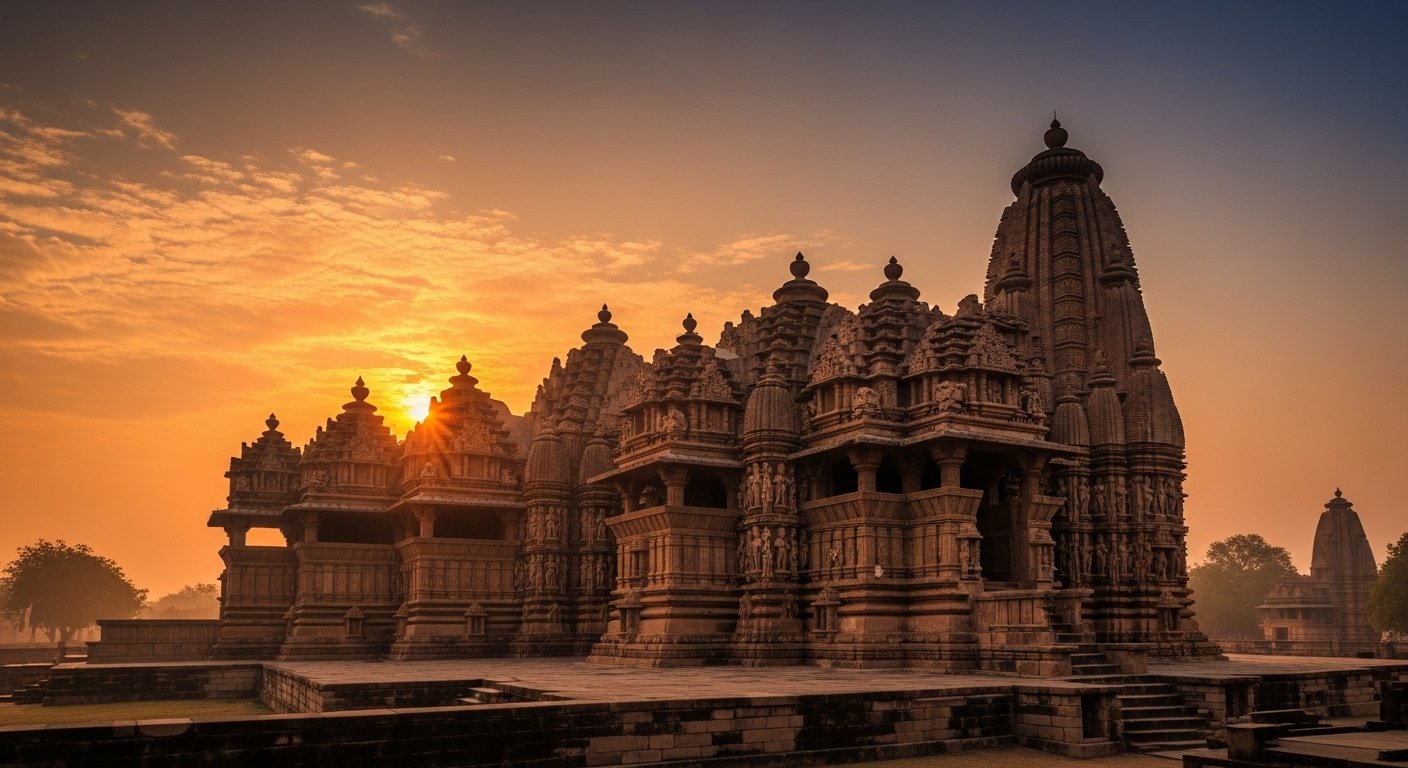
The famous Kandariya Mahadeva Temple (Western group) is richly decorated in high relief. Its exterior is covered with sculptures in layered spires.
-
Other temples like Lakshmana Temple, Vishvanatha Temple, Vamana Temple, Duladeo, among others, each display unique style differences—sometimes simpler, sometimes more ornate.
Top Temples to Visit in Khajuraho
If you have limited time, these are must-see temples you shouldn’t miss:
-
Kandariya Mahadeva Temple – The largest and most ornate; its spire is a towering example of Nagara architecture.
-
Lakshmana Temple – One of the oldest, dedicated to Vishnu, with intricate reliefs.
-
Vishwanatha Temple – Noted for its layout and carvings, including panchayatana style shrines.
-
Vamana Temple – Dedicated to one of Vishnu’s avatars; built around 1050-1075 CE. Wikipedia
-
Duladeo Temple – One of the last built during the Chandela period; less massive but has softer sculptural work. Wikipedia
Best Time to Visit Khajuraho
-
The ideal time is October to March when the weather is cool, dry, and pleasant—good for exploring temples and photography.
-
Summers (April-June) are hot; midday can be scorching, so mornings and late afternoons are better.
-
Monsoon (July-September) brings rain and greener scenery; fewer tourists, but temple access may be affected depending on rainfall.
How to Reach Khajuraho & Where to Stay
-
By Air: Khajuraho Airport connects to major cities like Delhi, Varanasi, Khajuraho.
-
By Train: Khajuraho has a railway station; better connectivity from cities like Jhansi, Satna etc.
-
By Road: Good road connections to nearby towns; many travelers come via road from Jhansi, Bhopal, Lucknow.
For staying, there are several guest houses, heritage hotels, mid-range & budget options close to the temple complex. Staying close to the Western Group of temples gives you early access and avoids midday crowds.
What to Expect & Travel Tips
-
Timings: Temples are generally open from about 6:00-6:30 AM until 5:30-6:00 PM. Check local listings; some temples may have slightly different hours.
-
Entry Fee: There is usually a fee for entry, and foreign tourists pay more than domestic. Budget accordingly.
-
Guided tours: A licensed guide can greatly enrich your visit—stories behind the carvings, symbolism, architecture are best understood with local experts.
-
Photography: Allowed in the outer parts; many interiors prohibit flash. Be respectful in sacred or inner areas.
-
Dress code: Modest clothing; covering shoulders and knees is recommended especially in sanctum areas.
-
Avoid visiting during major festivals if you prefer less crowded experience; or use festival time for a vibrant cultural experience.
Hidden Facts & Lesser-Known Insights
-
Khajuraho means “Kharjuravahaka” in Sanskrit: “date palm” + “bearer/carrier”, referring to date palms in the area.
-
Despite the erotic sculptures, a large part of the temple carvings are spiritual, mythological, or depict everyday life — the erotic art is just one facet of a much larger storytelling tradition.
-
The temples were built without mortar; the stone blocks are fitted using precision carving. Over centuries, survival owes much to their remote location and durable craftsmanship.
Suggested Itinerary for 1-2 Days in Khajuraho
Day 1
-
Arrive early; check in near temple complex.
-
Morning: Visit Western Group (Kandariya Mahadeva, Lakshmana, Vishwanatha) to catch cool air and good light.
-
Lunch, rest during hottest midday.
-
Afternoon: Eastern Group (like Vamana Temple, Javari Temple) or Southern Group if time allows.
-
Evening: Sound & Light show (offered by the ASI) in Western Group if available.
Day 2 (if staying longer)
-
Sunrise shoot or walk around early morning; fewer people, beautiful light.
-
Visit Jain temples (less erotic, more serene) in the Eastern Group.
-
Local cultural experiences: dance, local markets, museums.
-
Departure.
Why Khajuraho Is More Than Just Erotic Temples
Many people think of Khajuraho just because of its erotic sculptures, but vertically, Khajuraho is a whole symphony of architecture + spiritual life + arts + ritual. The temples are celebrations of life, cosmos, and belief. Their layouts reflect cosmic geometry; the sculpture tells stories not just of love, but also sacrifice, devotion, family, art, politics, mythology.
Conclusion
Khajuraho is a unique blend of artistry, spirituality, and history. Visiting here isn’t just about seeing sculptures—it’s about understanding centuries of craftsmanship, faith, and cultural synthesis. Plan your visit well, go early, keep respect, and let each carving, each passageway, each temple tell its story to you.