


Taj Mahal Agra – History, Facts, Visiting Hours, and Travel Guide

Introduction: The Symbol of Eternal Love
Few landmarks in the world capture hearts like the Taj Mahal. Located in Agra, India, this UNESCO World Heritage Site is one of the Seven Wonders of the World, attracting millions of travelers each year.
Built by Mughal Emperor Shah Jahan in memory of his beloved wife Mumtaz Mahal, the Taj Mahal stands as a symbol of love, loss, and architectural brilliance. Whether you’re a history lover, photographer, or global traveler, visiting the Taj Mahal is a must-do experience in India.
🏛️ Taj Mahal History – The Love Story in Marble
The story of the Taj Mahal dates back to 1631, when Mumtaz Mahal, Shah Jahan’s wife, passed away during childbirth. Devastated, the emperor decided to immortalize her memory through the creation of a breathtaking mausoleum.
Construction began in 1632 and took 22 years to complete, involving over 20,000 artisans from across India, Persia, and the Ottoman Empire. The marble was sourced from Makrana, Rajasthan, while precious stones came from China, Tibet, and Sri Lanka.
The result was an unparalleled masterpiece of Mughal architecture — blending Persian symmetry, Indian craftsmanship, and Islamic art.
🏗️ Architectural Marvel – A Perfect Symmetry
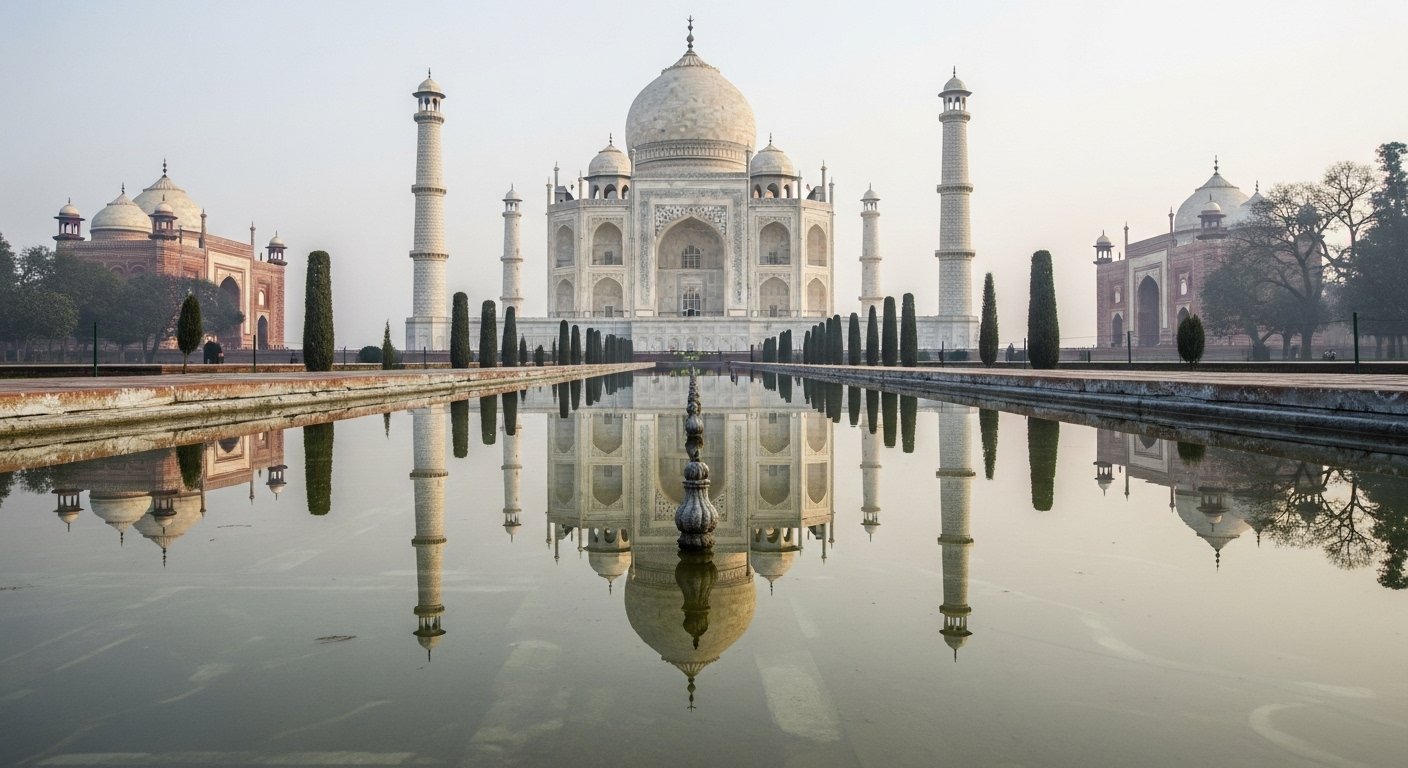
Every detail of the Taj Mahal is designed with symbolic precision. The main mausoleum stands on a raised marble platform, flanked by four tall minarets, each slightly tilted outward to protect the central dome from collapse during earthquakes.
Key Architectural Features:
-
Main Dome Height: 73 meters (240 feet)
-
Material: White Makrana marble
-
Style: Indo-Islamic & Persian architecture
-
Inlay Work: Over 28 types of precious stones (jade, crystal, lapis lazuli, turquoise, and sapphire)
-
Calligraphy: Quranic verses inscribed using black marble inlay
The Taj Mahal’s reflection in the long rectangular pool of the Charbagh Garden creates a mirror-like illusion that symbolizes paradise.
🌅 Best Time to Visit the Taj Mahal
The best time to visit the Taj Mahal is during sunrise or sunset when the soft light gives the monument an ethereal glow.
-
Sunrise (5:30–7:00 AM): Ideal for photography, fewer crowds, and magical lighting.
-
Sunset (5:00–6:30 PM): The white marble turns golden pink under the setting sun.
-
Full Moon Nights: A rare, romantic experience when the monument glows under moonlight (available only 5 nights a month).
Best Season:
-
October to March: Pleasant weather and clear skies.
-
Avoid: May–July (very hot) and monsoon months (July–September).
🎟️ Taj Mahal Entry Fee, Timings & Rules (2025 Update)
| Category | Entry Fee | Additional Charges for Main Mausoleum |
|---|---|---|
| Indian Citizens | ₹50 | ₹200 |
| Foreign Tourists | ₹1,100 | ₹200 |
| SAARC / BIMSTEC | ₹540 | ₹200 |
| Children under 15 | Free | Free |
Timings:
🕔 Opens 30 minutes before sunrise and closes 30 minutes before sunset.
🚫 Closed every Friday for prayers.
🌕 Night viewing: Available on full moon nights and 2 days before & after (except Fridays and Ramadan).
📍 How to Reach Taj Mahal, Agra
By Air: The nearest airport is Agra Airport (AGR), around 13 km from the Taj Mahal.
By Train: Agra Cantt and Agra Fort Railway Stations connect major Indian cities.
By Road: Agra is accessible via the Yamuna Expressway from Delhi (approx. 3.5 hours).
By Bus: Regular luxury buses operate from Delhi, Jaipur, Lucknow, and Gwalior.
📸 Best Photography Spots at the Taj Mahal
-
Main Gate (Darwaza-i-Rauza): The classic postcard view.
-
Charbagh Garden: Perfect for symmetrical shots.
-
Mehtab Bagh (Across Yamuna River): Great for sunset photos.
-
Southern Platform: Offers detailed views of carvings.
-
Yamuna River Bank: For reflection and peaceful backdrop.
👉 Tip: Use early morning light for less haze and better contrast. Avoid tripods (not allowed inside).
🕌 Inside the Taj Mahal – What to See
Inside the mausoleum, two false tombs commemorate Shah Jahan and Mumtaz Mahal. The actual graves lie in a chamber below, inaccessible to visitors.
Highlights inside:
-
Intricate floral carvings on marble walls
-
Quranic verses in black onyx
-
Delicate jali (lattice) screens
-
Perfect geometric symmetry in every detail
Visitors can also explore:
-
Mosque (west side)
-
Guest House (east side)
-
Garden Complex
-
Yamuna River back view
🌕 Taj Mahal Night View Experience
One of the most searched experiences is the Taj Mahal night viewing. On full moon nights, the monument radiates a silver hue, creating an unforgettable experience.
-
Tickets: Must be booked 24 hours in advance at the ASI office.
-
Viewing Duration: 30 minutes per group.
-
Time Slots: 8:30 PM to 12:30 AM.
-
Entry Gate: Eastern Gate only.
💡 Interesting Taj Mahal Facts You Probably Didn’t Know
-
Changing Colors: The marble reflects light differently at dawn, noon, and dusk.
-
Myth of the Black Taj Mahal: Shah Jahan allegedly planned a black marble twin across the Yamuna, but it was never completed.
-
Optical Illusion: As you move closer, the Taj appears to grow smaller—an intentional design trick!
-
Materials from Across the World: Precious stones from Sri Lanka, Tibet, and Afghanistan were used.
-
Hidden Calligraphy Secrets: The calligraphy enlarges as it rises so it appears uniform from below.
⚠️ Conservation Efforts & Pollution Control
The Taj Mahal faces threats from air pollution and the Yamuna River’s environmental decline. The Indian government has taken steps like:
-
Banning polluting industries around the Taj Trapezium Zone (TTZ).
-
Introducing electric buses and battery rickshaws.
-
Regular cleaning using Multani Mitti (Fuller’s earth) to maintain marble brightness.
-
Promoting eco-friendly tourism in Agra.
🧭 Suggested 1-Day Agra Itinerary
Morning:
-
Arrive before sunrise for the Taj Mahal sunrise view.
-
Explore gardens and the main mausoleum.
Afternoon:
-
Visit Agra Fort (2 km away).
-
Lunch at a local restaurant—try “Agra petha” sweets.
Evening:
-
Head to Mehtab Bagh for sunset photography.
-
Stroll through Sadar Bazaar for souvenirs.
✅ Travel Tips Before You Go
-
Book tickets online via asi.payumoney.com
-
Avoid Fridays (closed).
-
Carry a small bag (large backpacks restricted).
-
Photography allowed outside only.
-
Hire licensed guides (official ID).
-
Dress modestly (especially inside the mausoleum).
-
Arrive at least 30–40 minutes before sunrise.
❤️ Conclusion: Experience the Magic of the Taj Mahal
The Taj Mahal is not just India’s crown jewel — it’s a timeless masterpiece that transcends architecture and emotion. Every stone tells a story, every reflection whispers of eternal love.
Whether you’re visiting at sunrise, under moonlight, or through the golden glow of sunset, the Taj Mahal promises an experience that will stay with you forever.
If you’re planning your next trip, add Agra to your India itinerary — because no journey through India is complete without witnessing this symbol of everlasting love.